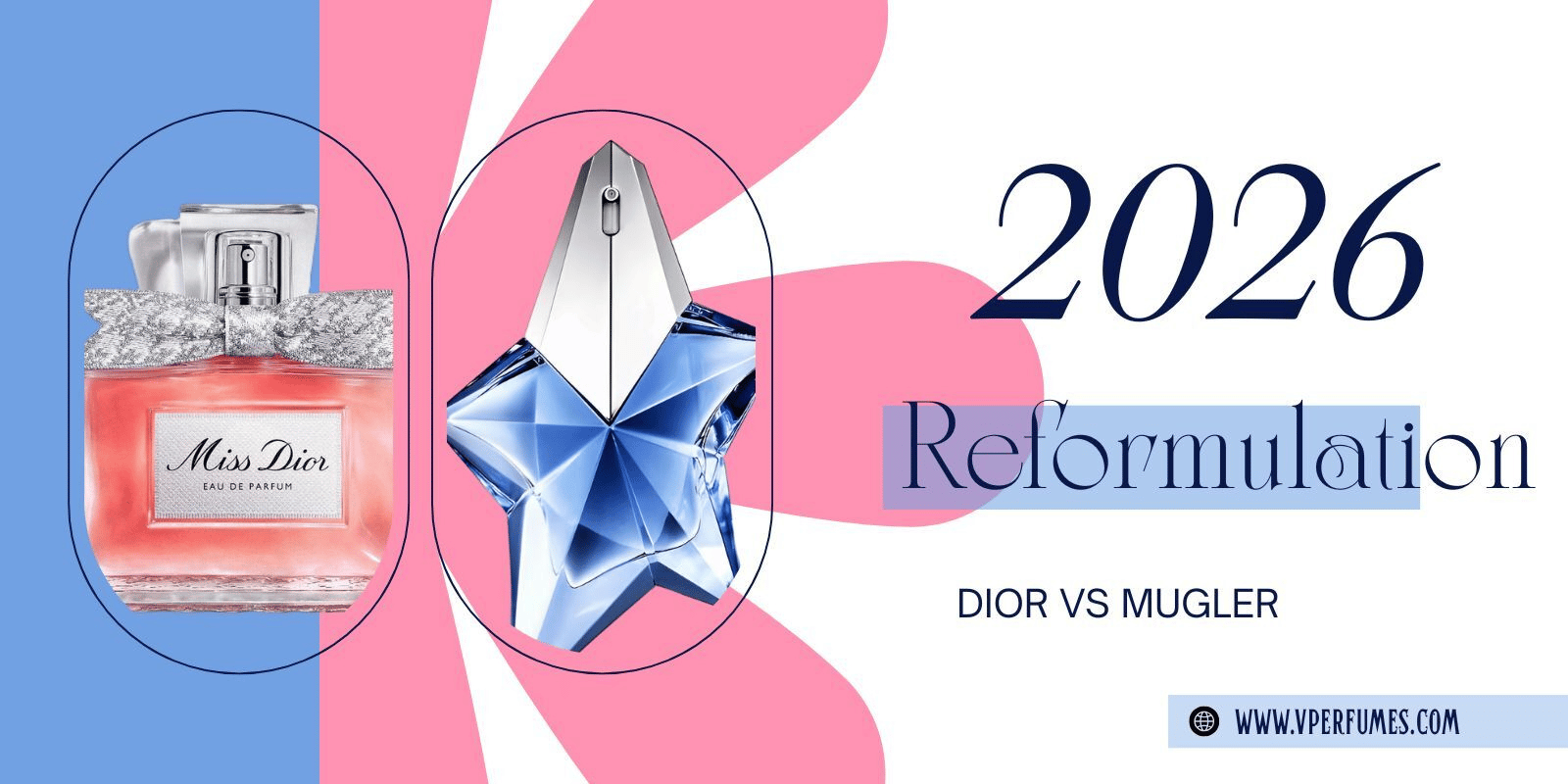
In 2026, two fragrance stories sparked very different reactions from perfume fans. Dior’s reported Miss Dior Eau de Parfum reformulation has received criticism from many fragrance enthusiasts, while reports of the original Mugler Angel formula returning have been met with excitement.
These two situations highlight a question that often appears in the perfume world. Why do brands change a fragrance that already has a loyal following instead of creating a new flanker with a different direction? Better yet, why not create an entirely new fragrance?
The Miss Dior reformulation controversy
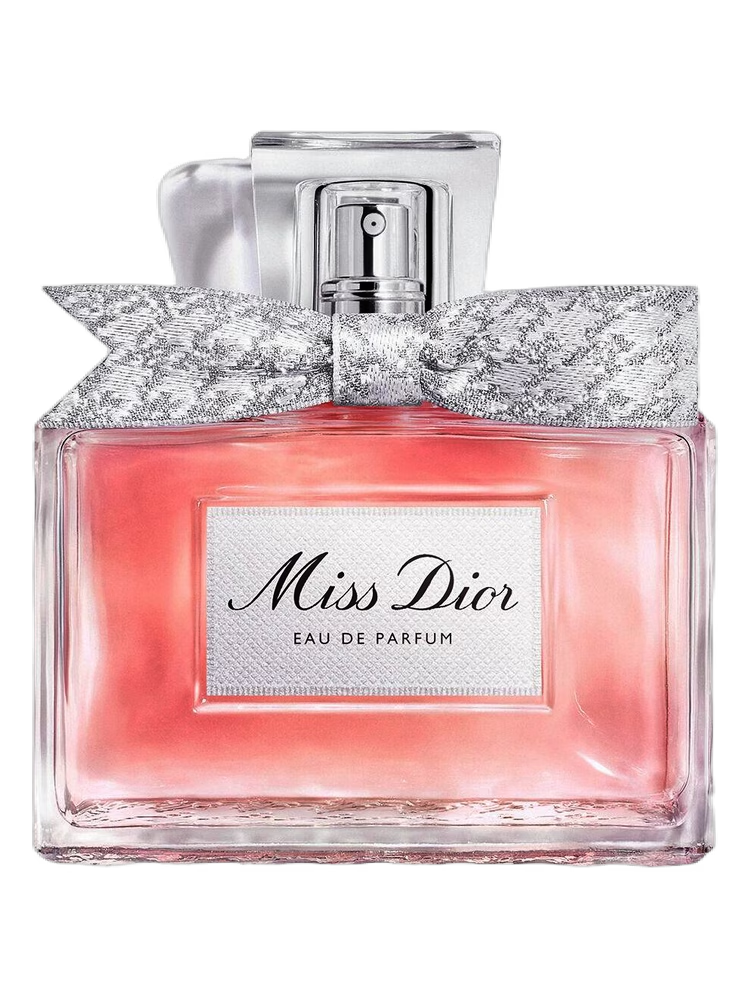
Miss Dior remains one of Dior’s most recognised women’s fragrances. The fragrance has gone through several changes over the years, but the latest reported reformulation has created a wave of discussion.
Many fans have criticised the new version because they feel it moves away from the chypre scent profile they originally loved. For casual perfume buyers, these conversations can feel confusing. A bottle may look almost identical on a shop shelf, while the juice inside feels different.
Perfume formulas can change because of ingredient restrictions, availability of raw materials, production decisions, or a brand’s desire to update a fragrance for current tastes. The challenge for brands comes from changing something that already holds emotional value. Customers do not only buy a name or a bottle. They buy a familiar experience they have come to recognise.
Why Mugler Angel fans celebrated the original formula’s return

Mugler Angel has one of the most recognisable fragrance identities. Since its launch in 1992, the fragrance has built a dedicated following because of its, unusual at the time, combination of sweetness, patchouli, and gourmand notes.
Over time, many fans felt that newer versions did not deliver the same aroma as older bottles. Therefore, reports that the original Angel formula has returned in some markets have naturally created some excitement.
The positive reaction shows how much attachment people can develop towards a specific formula. For many buyers, the appeal comes from the scent matching the memory they have of it. When a brand brings back a version that fans feel connected to, the response can be very different from the reaction to an unexpected change.
Why brands reformulate instead of creating new flankers
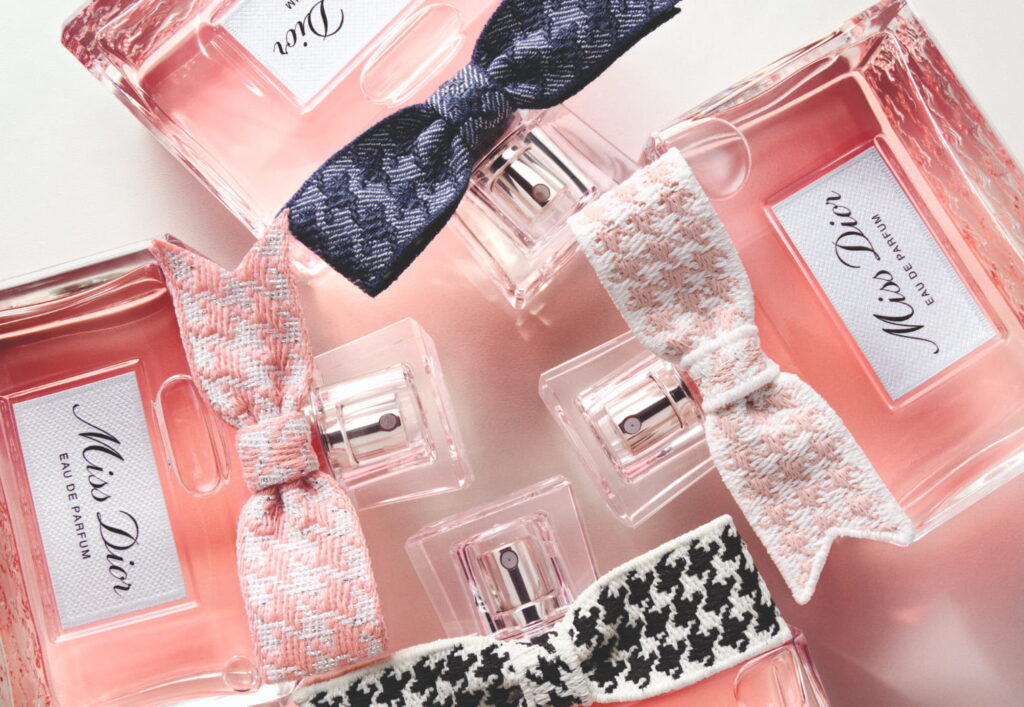
Creating a new flanker seems like the obvious choice for many. A brand could keep the original fragrance available while introducing a new version for customers who want something different.
In practice, brands often reformulate existing fragrances because a popular name carries significant value. A familiar fragrance can reach a much larger audience than a new launch. Updating an existing product can also help a brand manage ingredient changes, production costs, and shifting market preferences.
The problem comes when customers feel the change affects the identity of the fragrance. A new flanker gives buyers a choice. A reformulation changes the product that people already know.
The difficult balance between tradition and change
Perfume houses face a complicated challenge. They need to maintain beloved fragrances while adapting to a constantly changing industry. Ingredients become restricted, consumer preferences shift, and production methods evolve.
At the same time, fragrance buyers have become more informed. Many customers compare batches, research ingredients, and discuss small differences online. A formula change that might have gone unnoticed years ago can now become a worldwide conversation within days.
Miss Dior and Mugler Angel show two sides of the same issue. One fragrance change has frustrated many fans who miss a previous version. Another has delighted customers who feel a familiar favourite has returned.
Finding a fragrance that matches your style can complete your grooming routine. For the latest fragrance releases, visit V Perfumes, your go-to fragrance shop in the UAE. Get your hands on all your favourite fragrances and many more. Shop online or in-store for the best prices in the UAE and GCC region.