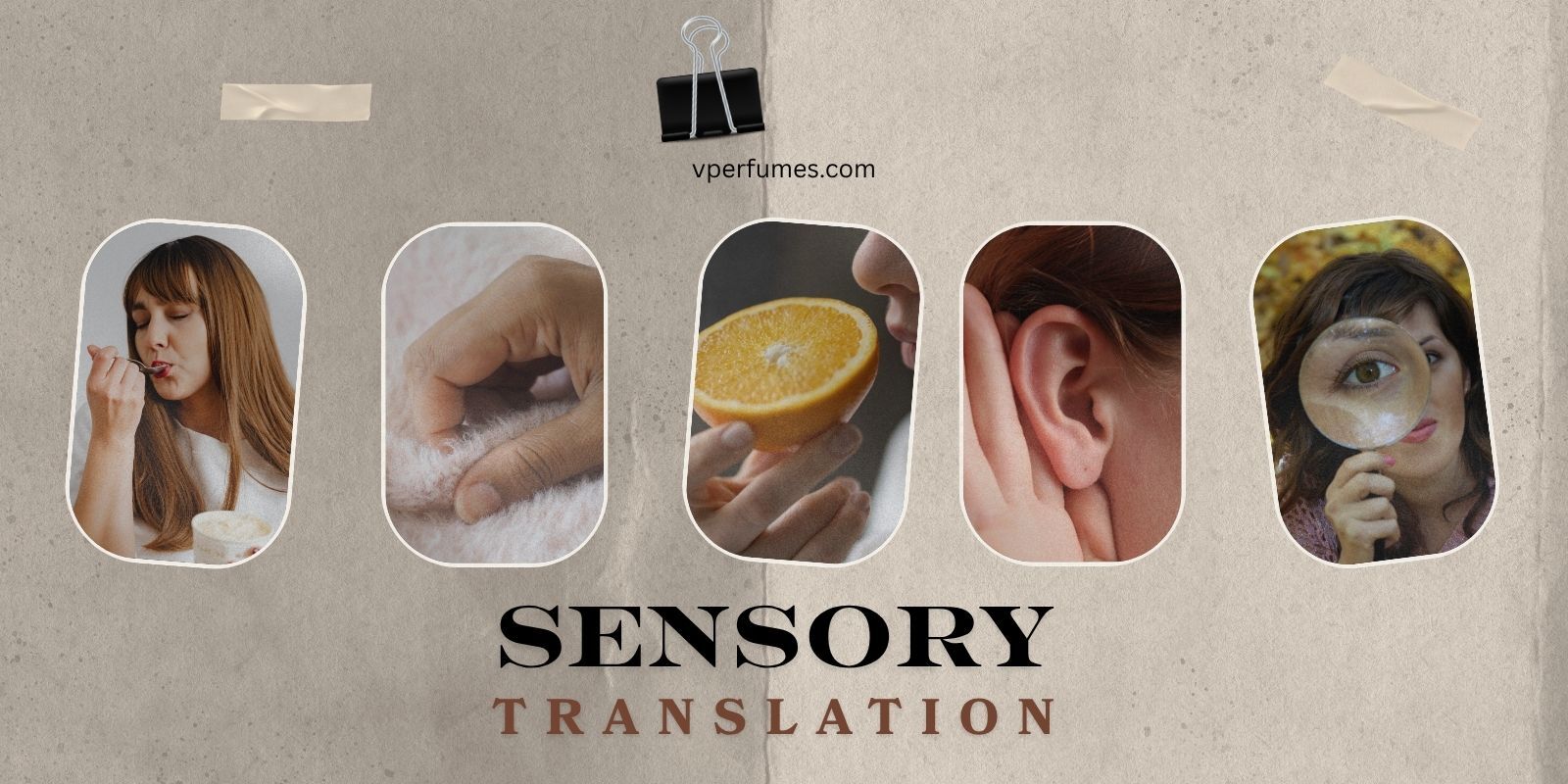
There aren’t many words to describe what things smell like (in the English language, at least); therefore, we borrow words from the other four senses. I noticed this while watching my favourite food channel on YouTube (@BerylShereshewsky). It stood out to me how similar her descriptions of food are to the language I use to describe perfumes.
I brushed it off at first, thinking it was only because food-like fragrances are so popular right now. And while gourmand fragrances have been trending for a while and are becoming increasingly realistic, we actually borrow many other words from our senses to describe scents. Let’s take a closer look at the sensory language we use to describe how we experience perfume.
Visual

Visual descriptions are often divided into colour and structure. This is where we get green perfumes, a term that typically refers to fragrances that smell like fresh-cut grass or crushed leaves. Similarly, a red fragrance is often perceived as fiery; while it may not be a standard industry term, the association with heat and intensity is immediate.
Fragrances are described by colour all the time. Amber, for instance, is a fragrance family and accord that is essentially a colour when you think about it. We even use terms like dark and light to describe the weight of a perfume, much like we do with paint or light.
Structure, on the other hand, is found in atmospheric or industrial scents, fragrances that evoke the smell of an old stone building or an Eastern Orthodox church. These descriptions are often more complex because the structure serves as the main theme while engaging multiple senses. When you imagine the structure, you naturally begin to consider its colours, hues, intensity, shape, and even the feel of the materials.
Auditory

Fragrances can smell sharp or flat. Do these terms sound familiar? That’s because they are the same words we use to describe the pitch or intensity of sounds. We can also describe whether a fragrance is harmoniously blended or not, much like a song.
Furthermore, fragrances are divided into genres, just like music. Terms such as notes and accords were originally borrowed from the musical world. These have become essential fragrance descriptors, both of which are borrowed from our auditory sense.
Gustatory

Rounding back to gourmand fragrances, the fragrance world has borrowed many terms from this sense. Almost every word used to describe a dish can also be applied to a fragrance. A scent can be as sweet as spun sugar, as tart as a lemon, as aromatic as Karak Chai, or as bitter as dark chocolate.
We frequently use descriptors like juicy and creamy. These terms describe the texture of a food just as much as its flavour. Because our senses of taste and smell are so biologically intertwined, it feels only natural to describe a scent by how we might taste it on the tongue.
This is also why it isn’t just gourmands that are described in culinary terms; fresh and herbaceous scents are as well. Other examples include fruity or sour notes that fall into floral or amber fragrance families, as well as the salty accords often found in aquatic fragrances.
Tactile
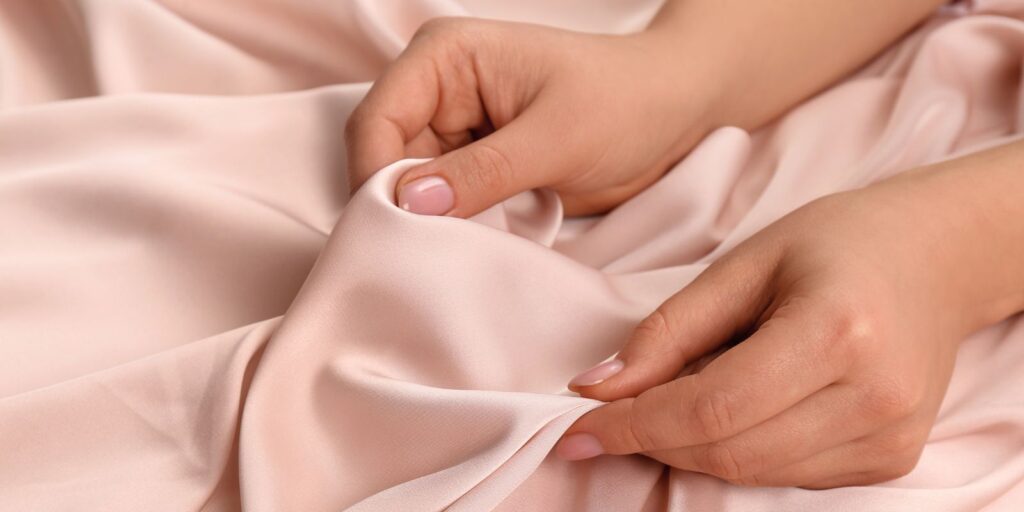
Last but not least, we have the sense of touch. This is perhaps the most intimate way we describe scents, as perfume is something we literally wear on our skin. We often describe fragrances through the lens of texture; a scent can feel as smooth as silk, as soft as velvet, or as dry as a piece of old parchment.
Think of powdery fragrances. A term so common in the industry that we almost forget it describes a physical sensation. We might describe a perfume as sharp or prickly if it has a high concentration of certain woods or spices, while others are described as creamy or round.
Temperature also plays a massive role in our tactile descriptions. We speak of cold aldehydes that feel like shivering in the winter air, or warm resins that feel like being wrapped in a heavy woollen blanket. Just as we might run our hands over a fabric to understand its quality, we use tactile language to grasp the invisible texture of the air around us.
Now that you know why we describe scents the way we do, maybe you can find the exact sensory language you need to borrow to describe the exact fragrance you’re looking for. This article was inspired by Beryl’s descriptions of food and Surya (SunScentFragrance)’s video titled Describe Scents Like a Perfumer. I recommend you check both channels out for a well rounded scensory experience.
Visit V Perfumes, your go-to fragrance shop in the UAE, to get your hands on all your favourite fragrances and many more. Shop online or in-store for the best prices in the UAE and GCC region.